If I were told that I could only concentrate on one genre of photography for the rest of my life, it would probably be landscape photography, as much for the process as the subject. Making landscape photographs transports me to a place of intense focus that usually takes me down one of two paths.
Often, its like composing a complex classical symphony for a full orchestra. One of the ways to strengthen a design is to limit the elements you include and in photography I can do that through the use of light and shadow as well as changing my point of view. Still, there can be dozens of elements that have to be arranged into a harmonious composition, and not all of them seem to fit at first. Making a single photograph can involve hours of work.
On the other hand, after 4o years of making photographs, there is often a kind of grand calculus going on in my head that I’m not always aware of on a conscious level, a kind of instinctual process where I compose and select camera settings in order to achieve my vision of the photograph I wish to make that is much more like playing smooth jazz than composing that symphony.
Both processes can lead to compelling photographs, and in the end, isn’t that all that matters?
Grand Canyon & Lower Falls of the Yellowstone River, 1H
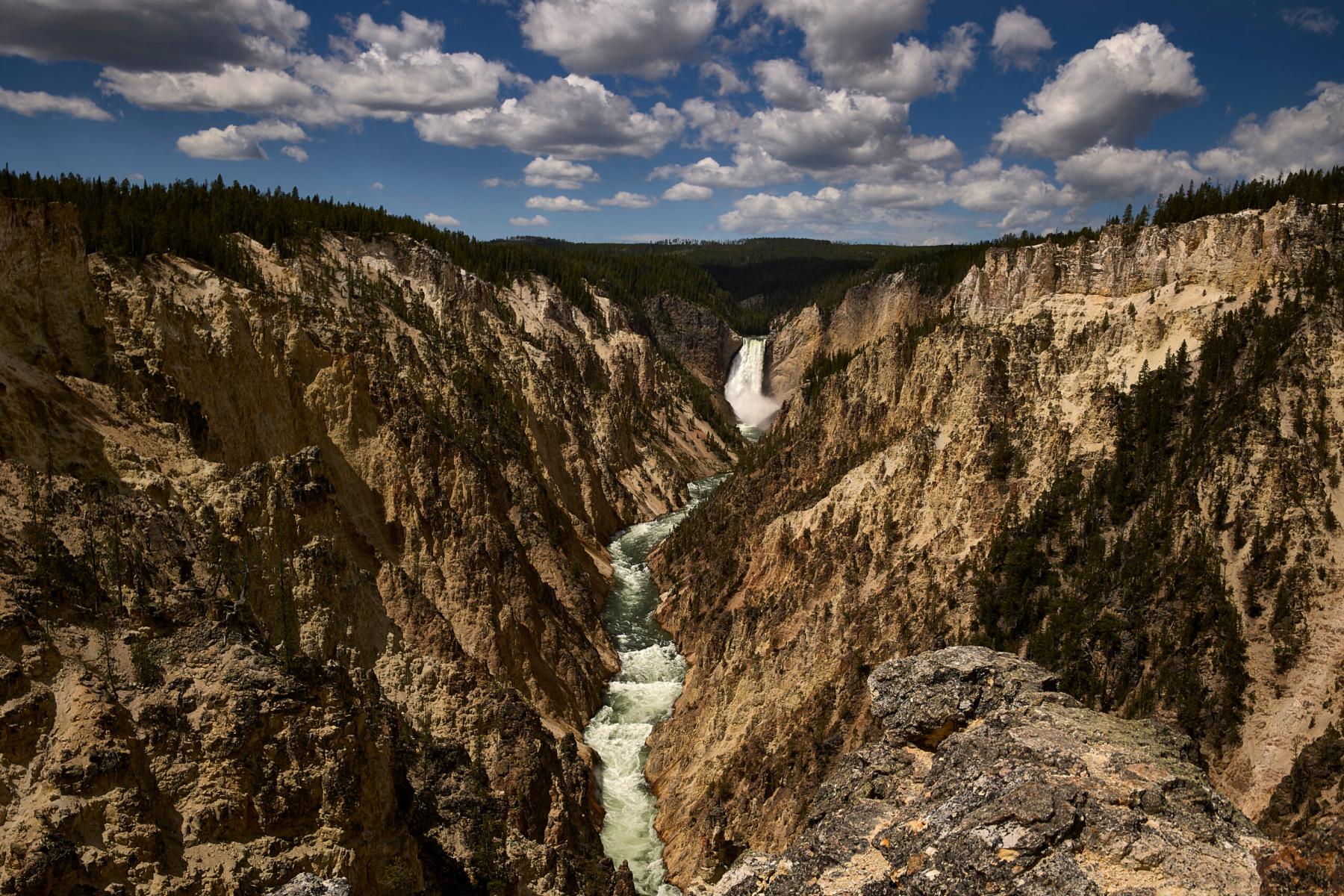
The Grand Canyon of the Yellowstone is about 28 km (17 miles) long, 250–350 meters (820–1150 feet) deep, and 450–1200 meters (1500–4000 feet) across. Lower Falls is about 100 meters (308 feet) high. The canyon was formed since the last glaciation (about 20,000 years ago) by water erosion along a fault that supported a lot of geothermal activity, as we can tell by the kinds and colors of rocks on the canyon walls. July 4, 2022